

Responsible gambling tools are most useful when they are chosen before play becomes difficult to manage. For readers comparing online casino grizzlys quest with other real money casinos Canada, the important question is not simply which games or promotions appear in a lobby. It is whether account controls, spending information and support options can help keep gambling within a deliberate entertainment budget.
Which controls deserve attention before the first deposit?
A deposit limit is usually the most practical first control because it creates a boundary around money added to an account. The available settings are described as daily, weekly and monthly limits, allowing a player to choose a period that matches their budget. A shorter limit can be useful when spending tends to change quickly, while a monthly ceiling may provide a broader view of entertainment costs.

Session reminders address a different risk: losing track of time. A player may set a reminder to pause and review how long they have been active, rather than relying on a feeling that “just one more game” will be brief. This does not make a game safer or change its mathematical outcome, but it can interrupt automatic behaviour and create a moment for a conscious decision.
Self-assessment information can help identify whether gambling is remaining recreational. Consider questions such as whether spending is affecting household bills, whether losses are being chased, or whether gambling is being hidden from someone close to you. If any answer causes concern, using a stronger restriction or contacting support is more sensible than increasing a limit to accommodate the concern.
How should a realistic gambling budget be set?
Begin with money that remains after essentials, debt payments, savings and regular household commitments. A gambling budget should be an entertainment expense, not a source of rent money, emergency funds or expected income. Set the amount in advance and treat it as spent once transferred, even if some of it remains in the account.
It can help to divide the budget into time periods. For example, a person might decide on a monthly entertainment amount and then set a smaller weekly boundary to avoid using everything early. The account’s limit should support that plan, not replace it. Keep a separate record of deposits, withdrawals and promotional balances, since an account display may not communicate the full cost of play over time.
Promotions require particular care because qualifying deposits, wagering conditions and expiry periods can encourage additional play. The published welcome offer includes several qualifying deposits, a seven-day claiming period and wagering conditions before bonus funds can become withdrawable. Those details do not make the offer suitable for every budget. Read the active terms, and never deposit more than planned to pursue a reward.
What can limits prevent—and what can’t they do?
Account controls can reduce access to money or interrupt a long session, but they cannot guarantee that gambling will remain harmless. A deposit limit may not include funds already in the account, and a session reminder does not force a player to stop. Controls are safeguards, not proof that an activity is affordable.
Limits also need to be understood before they are activated. The exact effect of changing a limit may depend on the account system and the applicable terms. A requested reduction is generally more useful when it takes effect promptly, while an increase may involve a delay or additional confirmation. If the display does not clearly explain timing, ask support before relying on the setting.
Players should also distinguish a temporary pause from self-exclusion. A pause may be appropriate when someone wants distance for a short period. Self-exclusion is a stronger choice when gambling itself has become difficult to control. The available information indicates that exclusion requests and some controls may require contact with support, so retain confirmation and avoid assuming that closing a browser or deleting a shortcut has the same effect.
When is outside support the better next step?
Support is worth considering when a player repeatedly removes limits, deposits to recover losses, borrows money, misses obligations or feels distressed after gambling. These signs call for a pause rather than a new strategy. Contacting the operator can clarify account controls, but operator support is not a substitute for independent help with harmful gambling.
For Canadian readers, the Responsible Gambling Council’s information resources offer public guidance on gambling risks and safer-play practices. Independent information can provide useful perspective when promotional pages or account balances make continued play feel more attractive than taking a break.
Practical barriers can make a pause easier. Remove saved payment details where possible, avoid gambling when tired or upset, and tell a trusted person that you are taking time away. If gambling is affecting finances, relationships or mental health, seek professional or community support. In an urgent emotional crisis, contact local emergency services or a crisis service rather than returning to gambling for relief.
How can province and account conditions affect decisions?
Responsible gambling settings operate within the operator’s account system and the player’s local eligibility. The available information says service and promotional access can differ by province, and the site is not registered with iGaming Ontario. Ontario residents should therefore avoid assuming that an offer, control or account function described elsewhere applies to them.
Age, residency, identity checks and account status can also affect access. Verification may be requested before a first withdrawal or during a later review, and incomplete details can delay account activity. These checks are separate from responsible gambling controls, but uncertainty about access can encourage repeated contact attempts or unnecessary deposits. Keep personal details accurate and review the current terms that apply to the account.
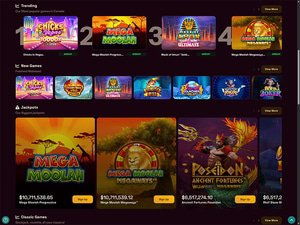
Before playing at any real money casinos Canada consumers are considering, compare the practical safeguards rather than focusing only on the game catalogue. Ask whether limits are easy to find, whether reminders are available, how self-exclusion is requested and where transaction records can be viewed. If those answers are unclear, choose caution: do not treat an attractive promotion or familiar theme as a reason to overlook missing information.
Responsible gambling questions Canadian players ask
Can a deposit limit guarantee that I will not overspend?
No. It can restrict new deposits, but it may not cover money already in the account or spending elsewhere. Set a limit before playing, track total gambling costs and treat any warning signs seriously. If you need to bypass a limit, stop and seek independent support rather than changing the setting.
Is self-exclusion the same as taking a short break?
No. A short break is a temporary personal decision, while self-exclusion is a stronger account restriction intended to prevent gambling access for a chosen period or under stated conditions. Ask support how the request works and keep its confirmation. Do not assume closing a browser creates self-exclusion.
What should I do if gambling is affecting my finances?
Stop depositing and avoid trying to win losses back. Review recent transactions, protect money needed for essentials and speak with someone you trust. Use independent gambling-support information or professional advice. If you feel unsafe or overwhelmed, contact an appropriate crisis or emergency service in your area.